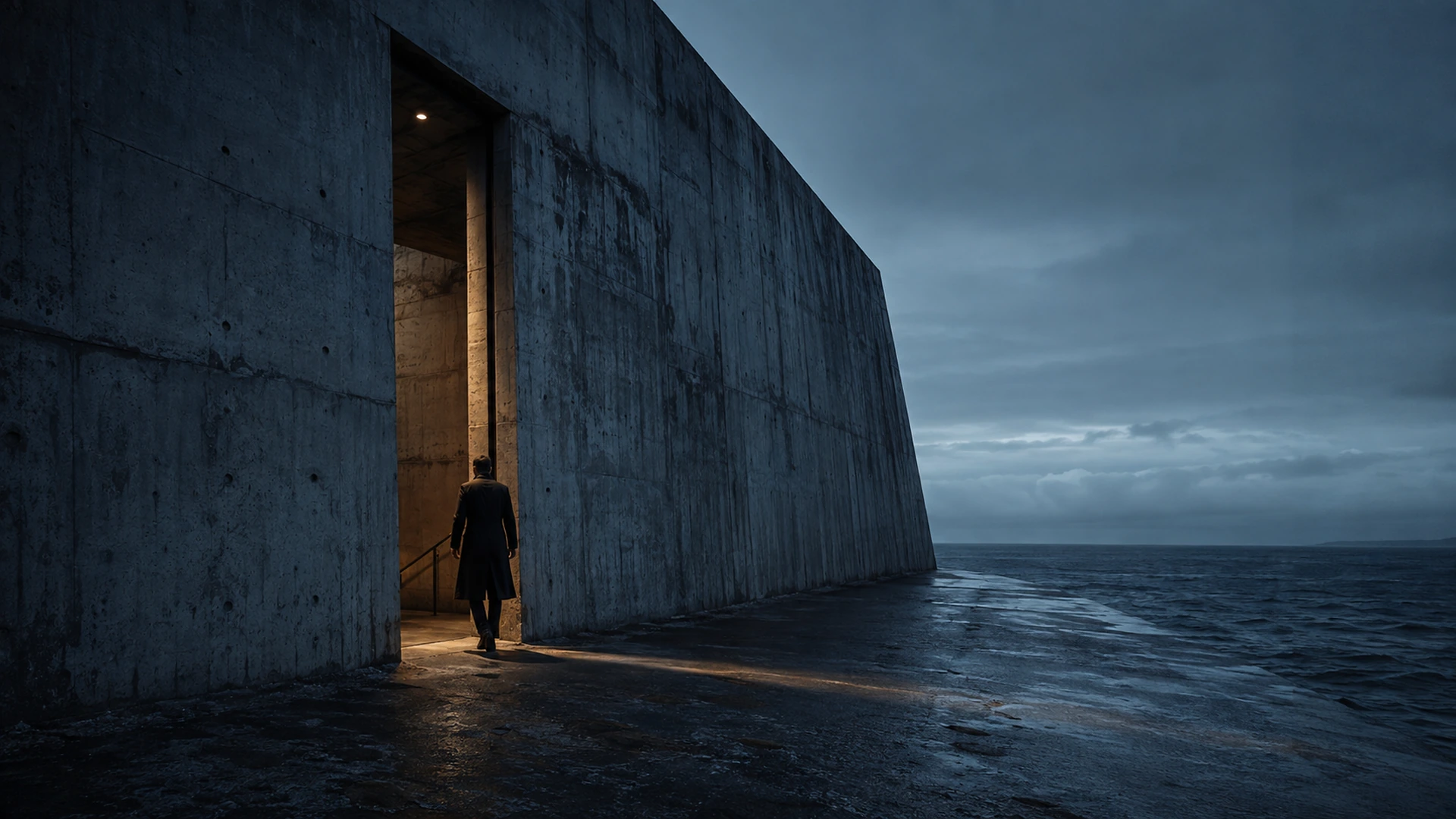
Independent product study
Object / Light
An adjustable desk lamp. One joint, one control, a pool of light where the work happens.
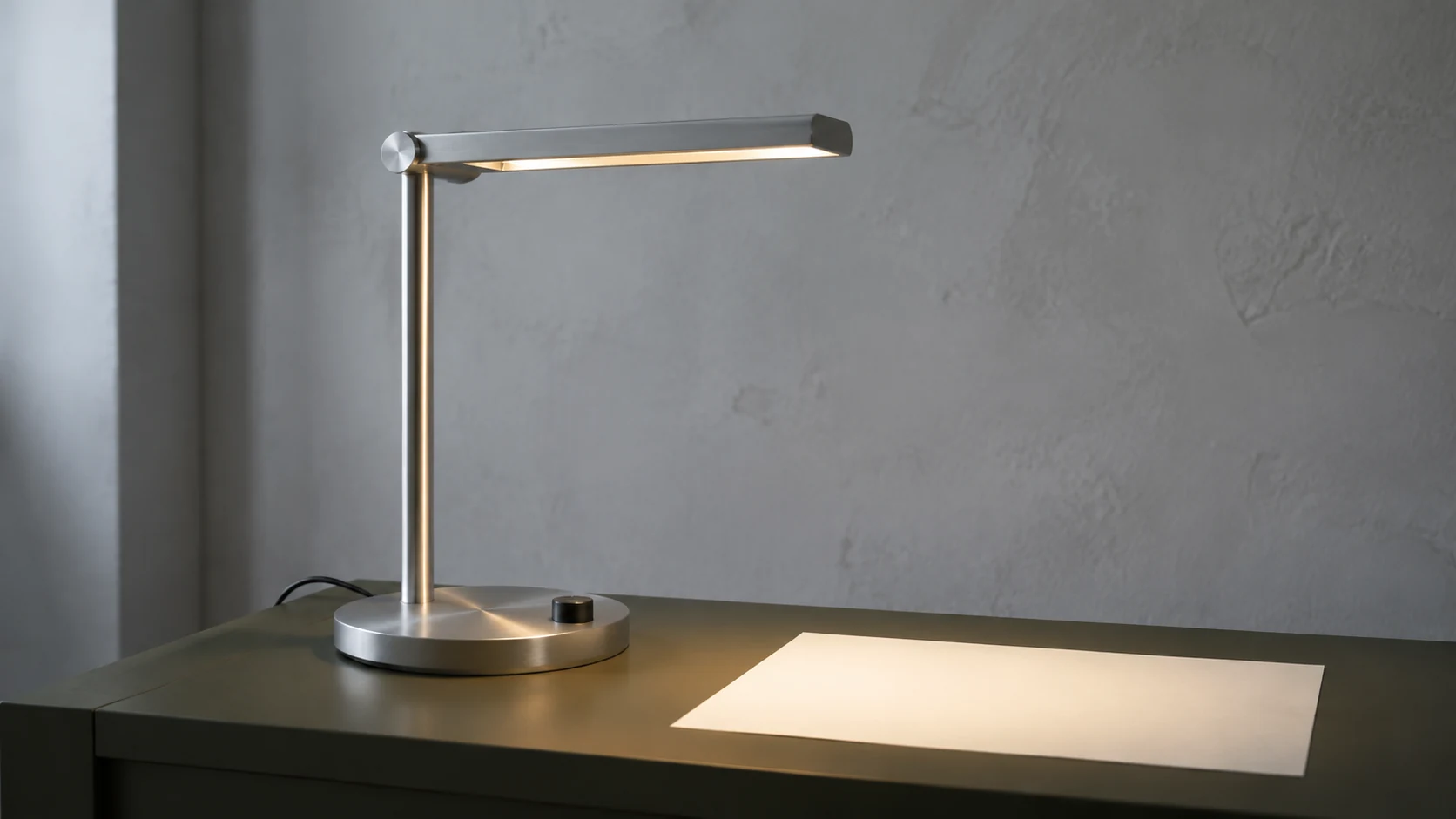
From object to use.
Come closer to the pivot and control, then step back to see the lamp at a desk and from the rear.
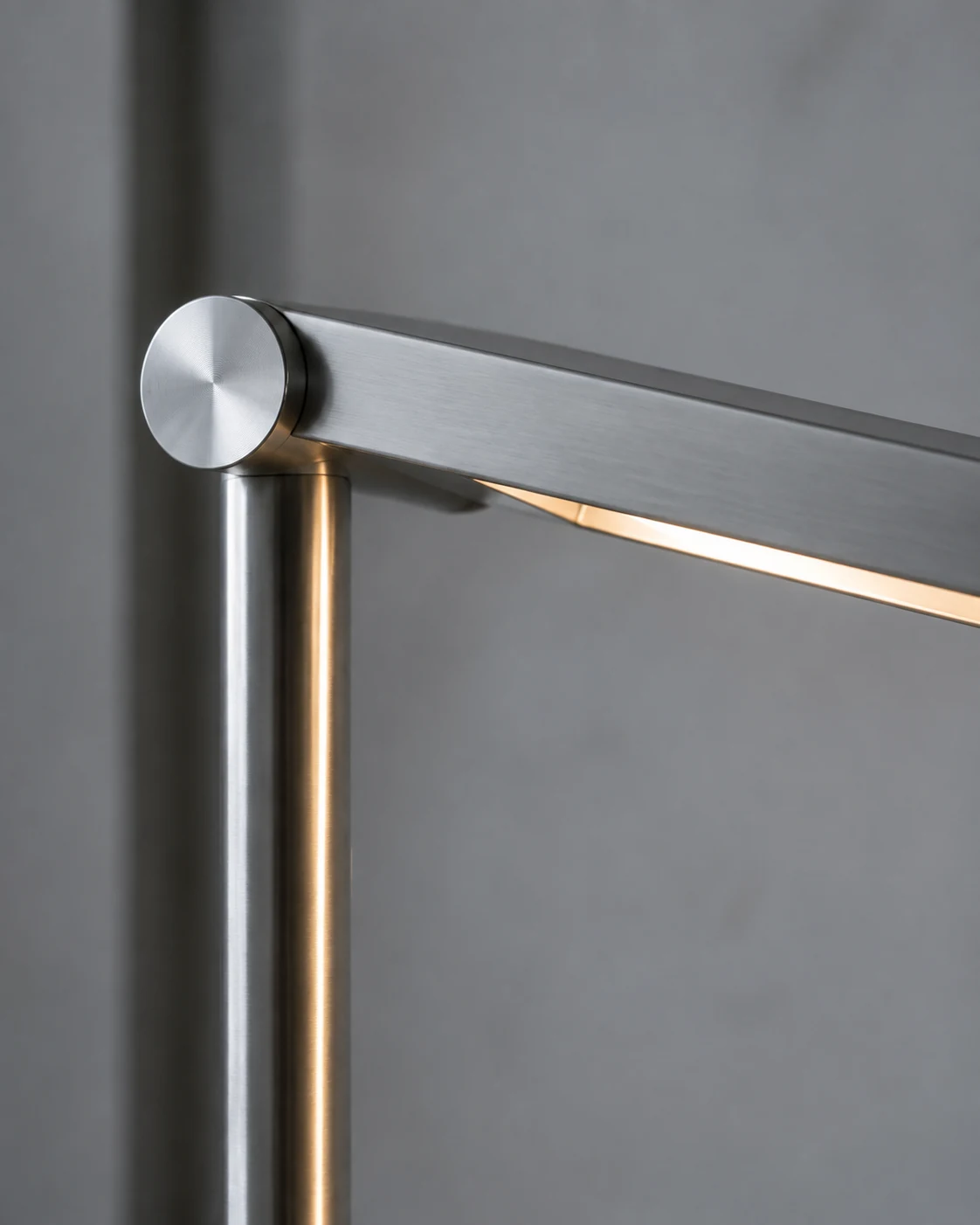
A single visible joint gives the head a direction.
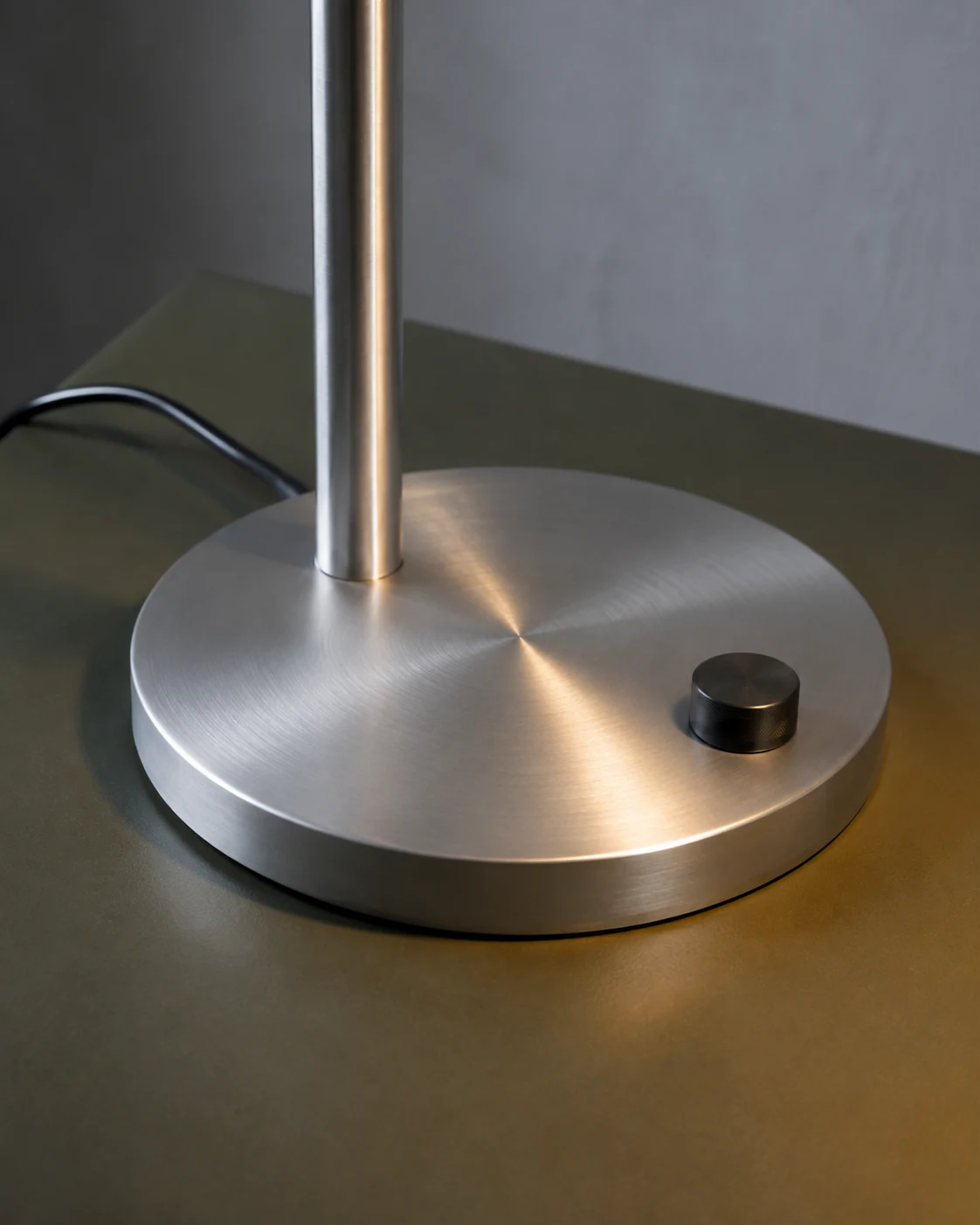
The control contrasts with the base in both tone and texture.
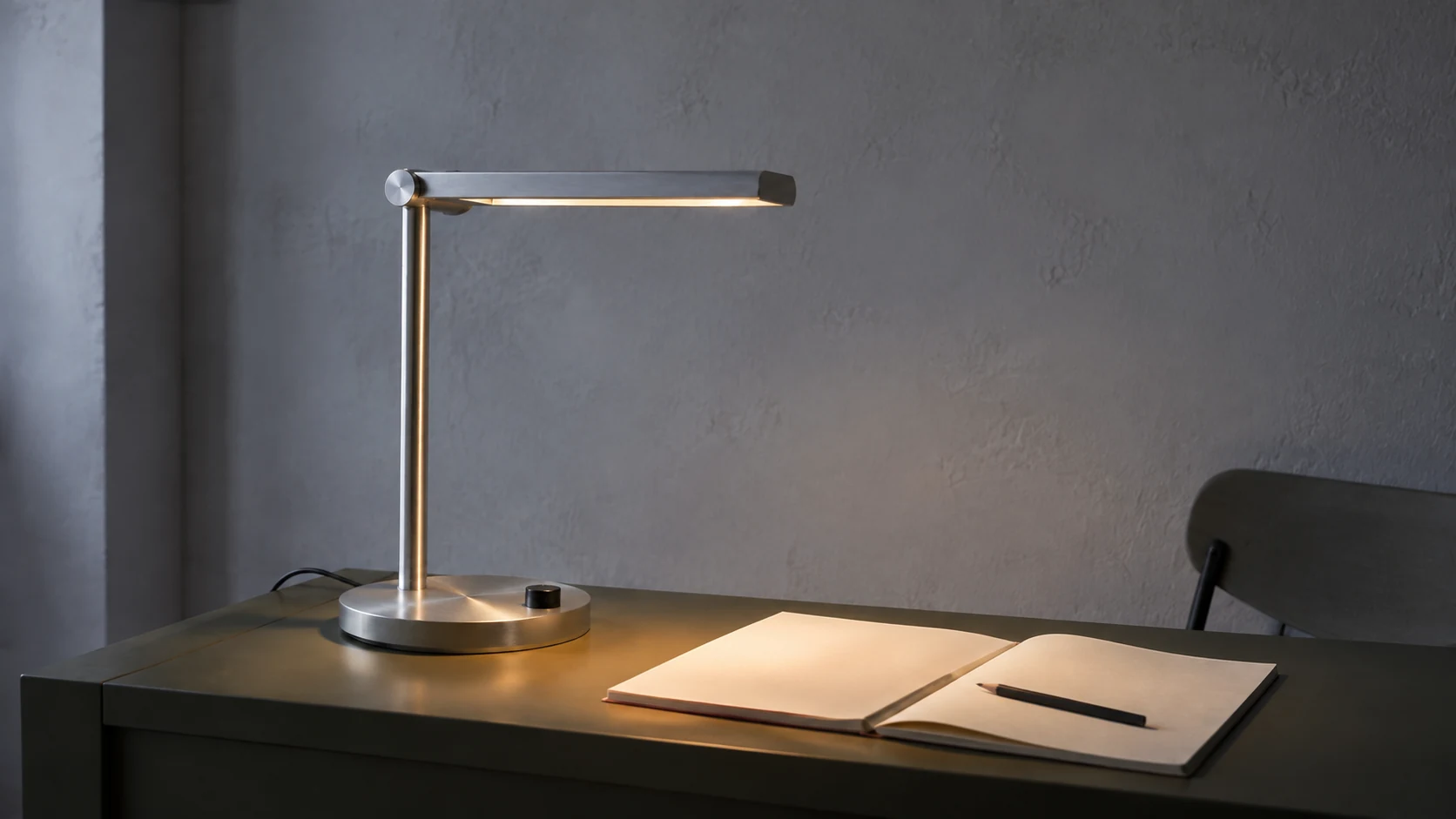
From ambient light to the page. A tonal study on this image.
Paper and a chair give the lamp a purpose and a sense of scale.
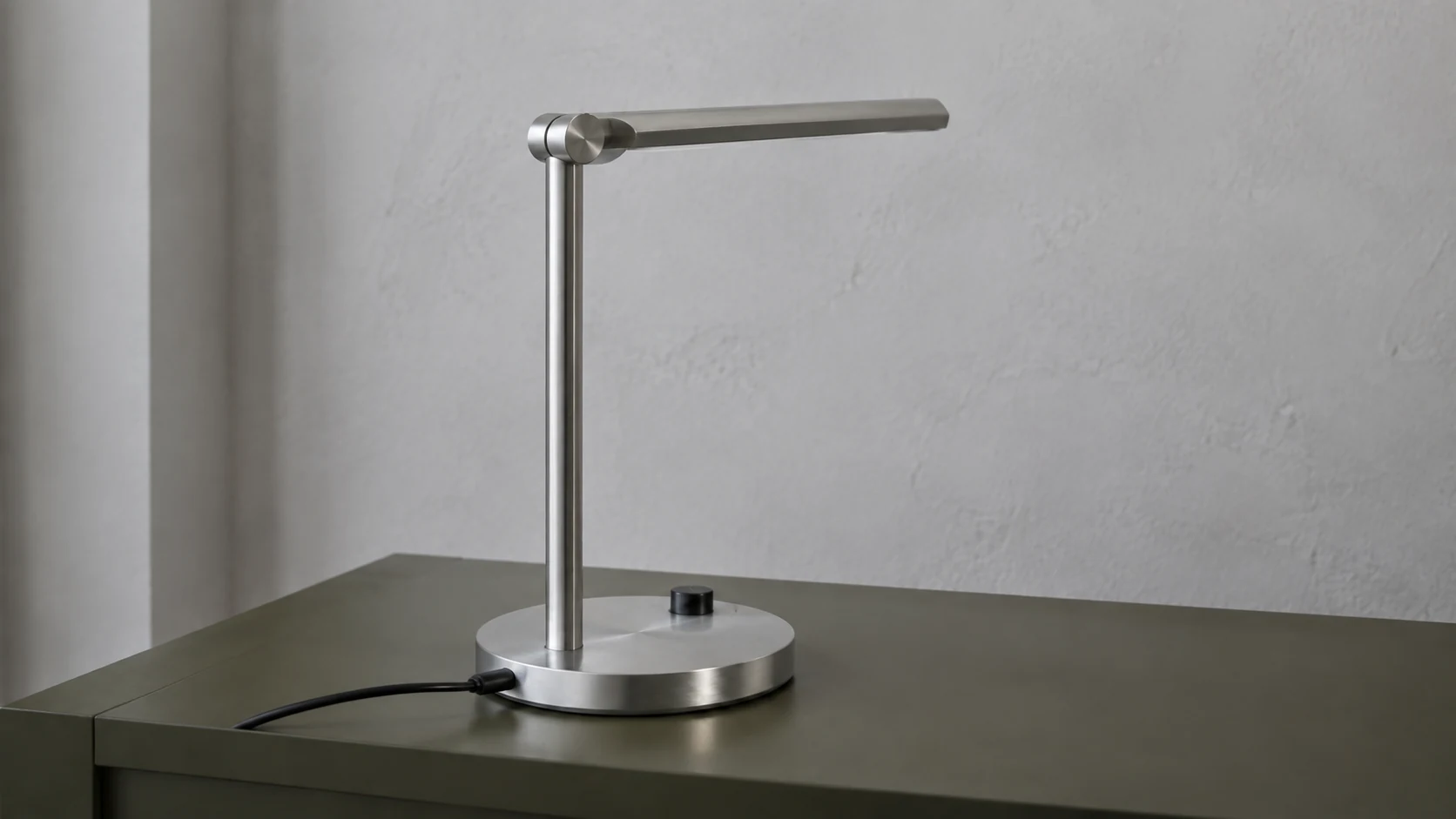
The reverse view follows the structure back to its support and power connection.
03 / DIRECTION NOTES
A form with a task.
The round base supports a vertical stem; one visible pivot carries the light head. A dark rotary control sits within reach and a cable leaves the back. The design gives every visible part a job.
The concept began with a simple requirement: the object should explain what it does before the description is read. Its restrained geometry keeps attention on the adjustable head and the lit working area.
Independent lamp concept. Five views and two reference sheets.
- MATERIAL
- Brushed aluminium, a graphite control and an underside diffuser.
- FUNCTION
- A tilting head directs light onto the working surface.
- SETTING
- An olive desk, a neutral wall and paper that makes the light visible.
Five parts. One clear purpose.
Base, stem, pivot, head and control define the lamp. The product views explore how their relationship reads from different angles.
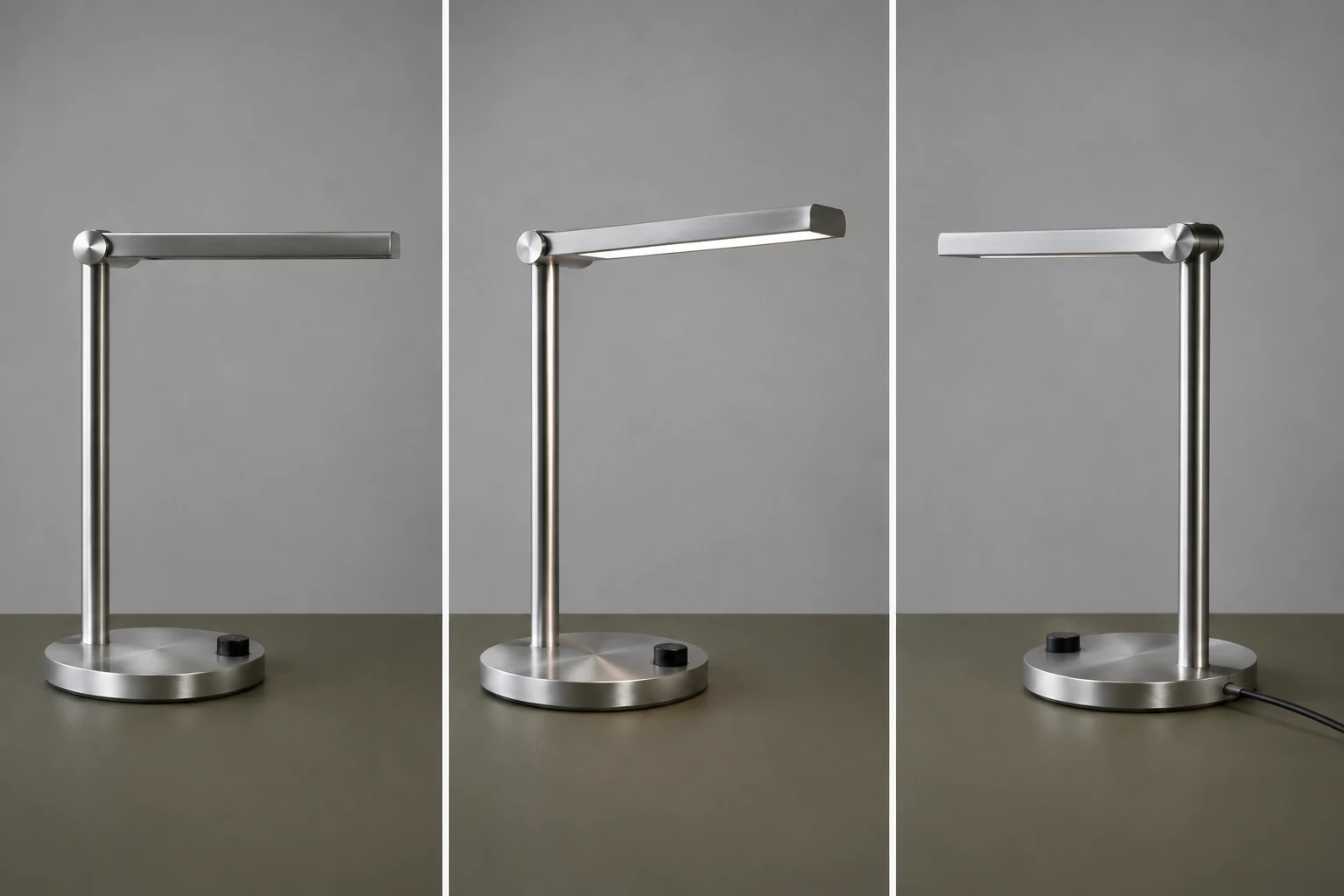
A closer look at the original image.
Side, three-quarter and reverse references. Generated views of a proposed design.
View full sheet ↗- Support
- A broad low base visually anchors the slender upright and projecting head.
- Adjustment
- The visible pivot suggests head tilt. The rotary control proposes switching and dimming without adding a screen.
- Material
- Linear metal brushing defines the head and stem; circular highlights describe the base. The dark knob stays easy to identify.
The light belongs on the desk.
The scene separates the light that describes the product from the light the product is intended to provide. A cool neutral room holds the metal; a warmer pool gives the working surface its focus.
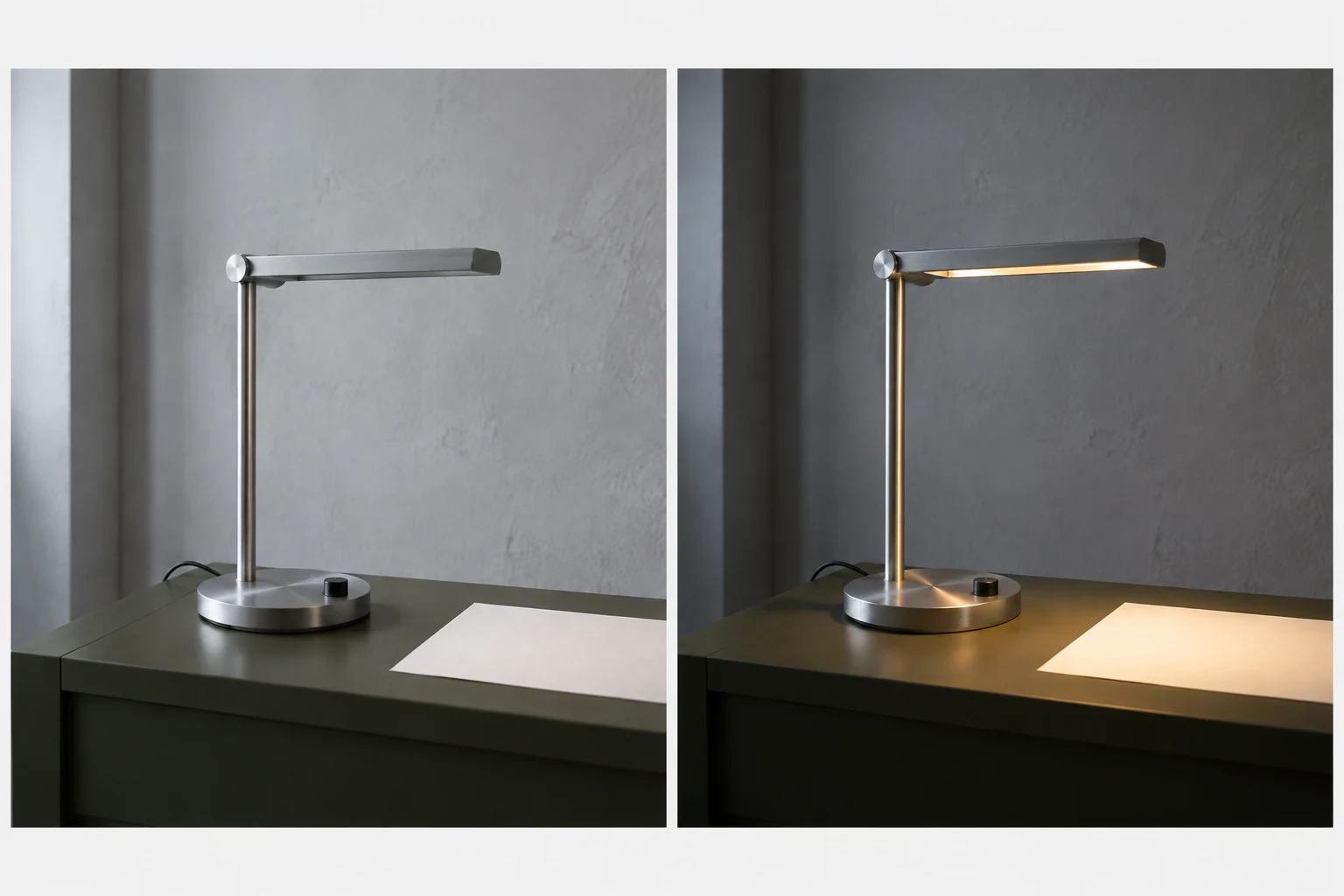
Ambient light and task light.
View full sheet ↗- Window
- Broad cool fill keeps metal texture readable and avoids a featureless black silhouette.
- Diffuser
- The recessed underside gives the light a visible source. The warm patch remains on the paper, with no theatrical beam in the air.
- Surroundings
- Olive paint and matte plaster restrain reflections. The paper shows the intended focus of the illumination.
Keep the object. Change the view.
One new hero established the lamp's appearance. Each subsequent image used it as a product reference; framing, head angle and lighting were varied to explain a different part of the idea.
Three visual decisions
- Geometry
- Keep one stem, one pivot and one control readable. Extra parts would make the proposed function less clear.
- Reflection
- Use broad gradients to show metal curvature and a restrained highlight to reveal the surface brushing.
- Context
- Use paper and a seat to establish purpose. Keep the surrounding desk free of decorative objects.
| View | Lens cue | Purpose |
|---|---|---|
| Pivot | 90 mm macro | Explain the connection between stem and head. |
| Control | 80 mm macro | Separate the rotary control from the brushed base. |
| In use | 50 mm | Show the relationship between lamp, page and seat. |
| Reverse | 70 mm | Read the support and rear cable connection. |
- 01
Define
Replace the abstract object with a reading-light concept whose parts have visible roles.
- 02
Reference
Use the same hero image for the series and reference sheets.
- 03
Inspect
Review the visible silhouette, control count, head connection and materials.
Have a world in mind?
Elsewhere ↗